
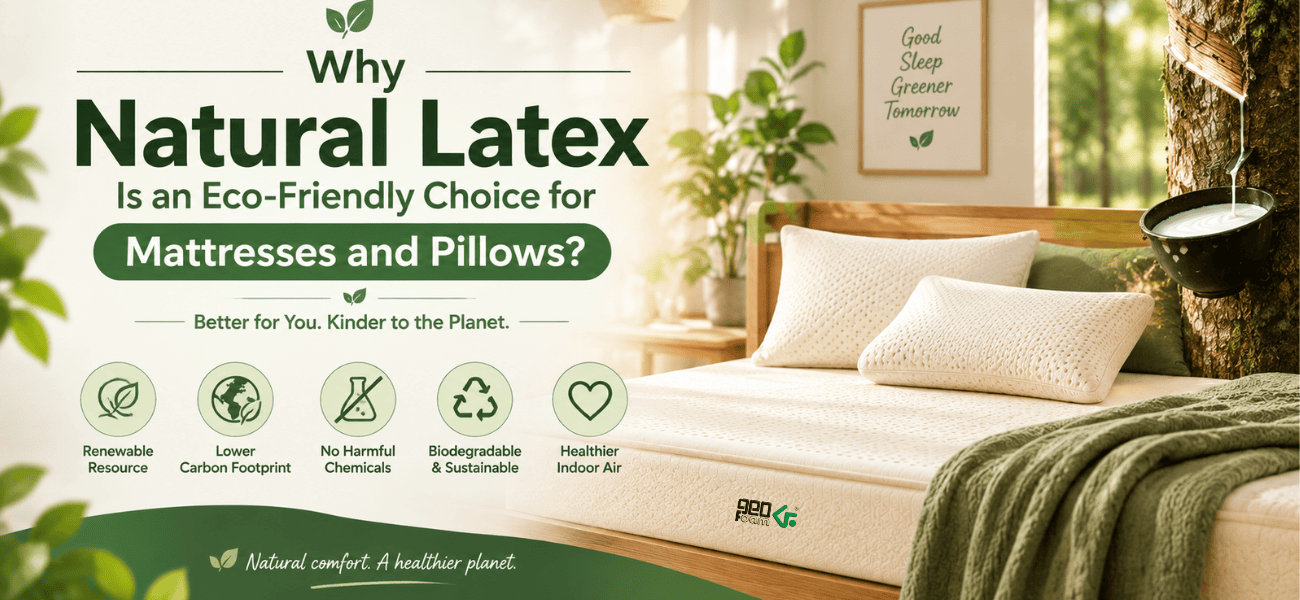
Why Natural Latex Is an Eco-Friendly Choice for Mattresses and Pillows?
A good night’s sleep matters, but so does how that comfort is made. As consumers become more environmentally conscious, natural latex mattresses and pillows are gaining popularity as a sustainable alternative to conventional synthetic foams.
Natural latex comes from the sap of rubber trees, making it fundamentally different from petroleum-based polyurethane foam. Its potential environmental benefits include renewable sourcing, durability, reduced replacement-related waste and biodegradability under suitable conditions.
But why is natural latex considered eco-friendly? Let’s explore.
Things to Check Before Buying a Latex Mattress Online
1. Natural Latex Comes From a Renewable Source
Natural latex is harvested from Hevea brasiliensis, commonly known as the rubber tree. Farmers collect the milky sap through carefully controlled cuts in the bark, leaving the tree standing and able to produce latex for many years.
Unlike conventional synthetic foams, which are primarily derived from petrochemical raw materials, natural latex begins with a renewable biological resource.
Rubber trees also absorb carbon dioxide as they grow and support agricultural livelihoods. However, the sustainability of rubber depends on responsible plantation management. Protecting forests, preserving biodiversity and avoiding environmentally harmful land conversion are essential to making natural latex a responsible choice.
2. Durability Helps Reduce Waste
One of the most important environmental advantages of natural latex is its resilience and durability.
A well-made natural latex mattress can provide comfortable support for many years. Its ability to recover from pressure and resist permanent deformation can help extend its useful life, although actual performance depends on latex quality, construction and maintenance.
Every mattress requires resources for manufacturing, packaging, transportation and disposal. When a mattress lasts longer, it may need to be replaced less frequently, potentially reducing the demand for new materials and the waste associated with discarded products.
Choosing a durable mattress is therefore an important part of making a more sustainable purchasing decision.
3. Is Natural Latex Biodegradable?
Natural latex is derived from a biological source and can biodegrade under suitable environmental conditions. Compared with many petroleum-based synthetic foams, it has the potential to break down more readily.
However, a finished mattress contains more than latex alone. Covers, adhesives, zippers, fire-retardant barriers and other components may not biodegrade in the same way.
Consumers should therefore avoid assuming that an entire latex mattress will simply disappear after disposal. Look for products with simpler construction and manufacturers that offer recycling, take-back or repurposing options.
4. Natural Latex and Indoor Comfort
Natural latex may also contribute to a cleaner-feeling sleeping environment. Its structure can be less conducive to dust-mite accumulation and, when properly manufactured and maintained, can help resist mould and mildew.
Some high-quality latex products may also have relatively low VOC emissions compared with certain synthetic foam products. This can reduce the strong chemical odour sometimes associated with new foam products.
Nevertheless, adhesives, fabric treatments and other components influence the overall indoor-air profile. Always check the complete product specifications rather than relying solely on the word “natural.”
5. How to Choose an Eco-Friendly Latex Mattress
For a more sustainable purchase, consider:
- Natural latex content:Check whether the product contains 100% natural latex or a natural and synthetic blend.
- Responsible sourcing:Look for transparent information about rubber cultivation and manufacturing.
- Durable construction:Choose a mattress designed to provide long-lasting comfort and support.
- Lower-emission materials:Ask about adhesives, covers and relevant emissions testing.
- End-of-life options:Prefer manufacturers that support repair, recycling, repurposing or take-back programs.
The Bottom Line
Natural latex is not impact-free. Rubber cultivation, processing, manufacturing and transportation all require resources. Its environmental advantages depend on responsible sourcing and the entire product life cycle.
Nevertheless, natural latex offers a compelling combination of renewable origin, long-lasting performance and potential biodegradability. For consumers seeking eco-friendly mattresses and pillows, it can be a thoughtful alternative to conventional synthetic foam.
Sustainability is about more than choosing a green label. It is about selecting products that are responsibly made, durable and designed with the future in mind.
Natural latex: lasting comfort, thoughtfully made.
Also Read: How Natural Latex Mattresses Are Made: Step-by-Step Manufacturing Process
Also Read: 10 Signs You Need to Replace Your Mattress for Better Sleep