Why Latex ?

Raw Material

Latex foam products are crafted from 100% natural latex, which comes from the sap of the rubber tree (Hevea Brasiliensis). This renewable sap is carefully collected,processed, and standardized, making it an eco-friendly and sustainable choice for bedding and comfort solutions.

Manufacturing Process

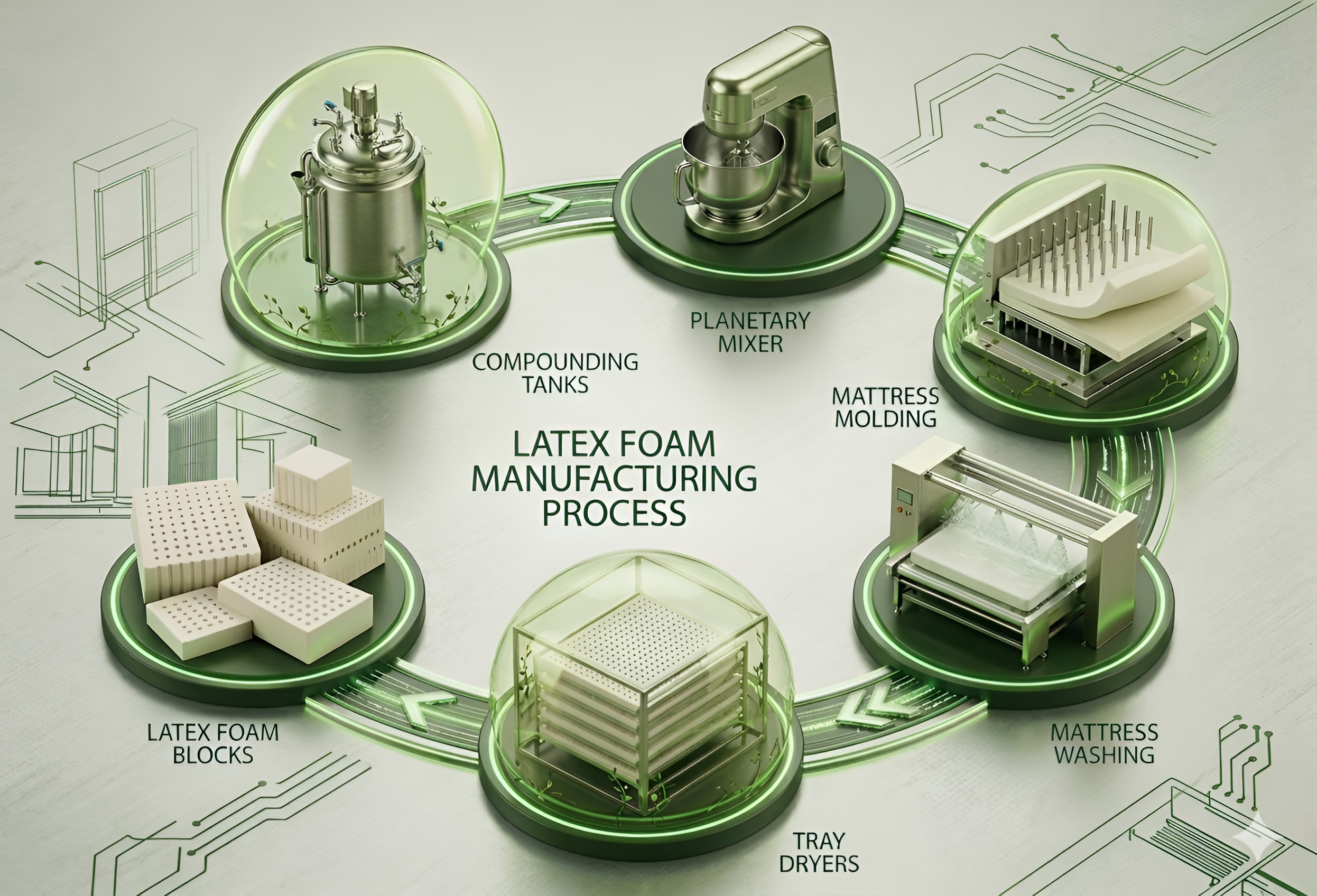
Transforming latex sap into premium foam is a precise process:

  • The latex sap is treated to remove the anti-coagulant (ammonia).
  • Special compounds are blended into the latex during foaming using a high-speed planetary mixer.
  • The mixture is poured into molds, where it transforms into a gel, then undergoes vulcanization and curing.
  • Once cured, the foam is removed, thoroughly washed, and dried to ensure purity and durability.
  • Finally, the latex foam is trimmed and finished, ready to deliver superior comfort in the market.

Latex Foam vs. Others

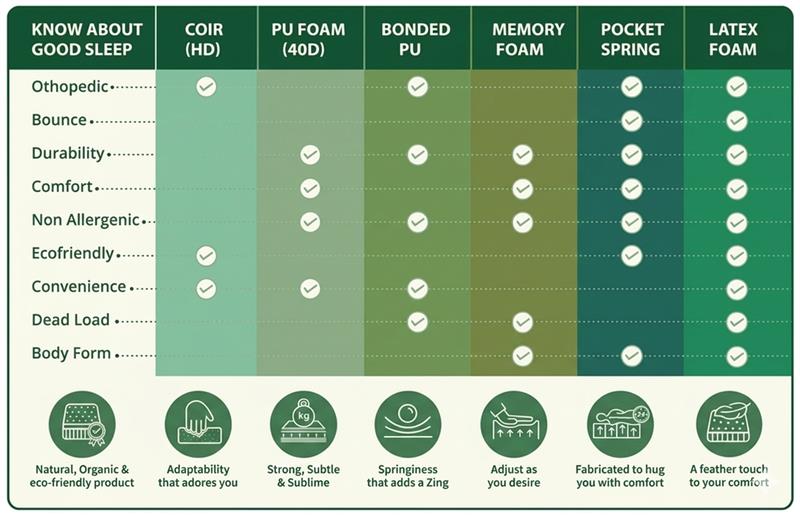
Latex foam stands apart from synthetic foams and other substitutes. It offers a natural, breathable, and resilient structure that supports your body while maintaining long-lasting durability. Unlike chemical-heavy alternatives, latex foam provides a healthier, eco-conscious option without compromising on comfort or performance.

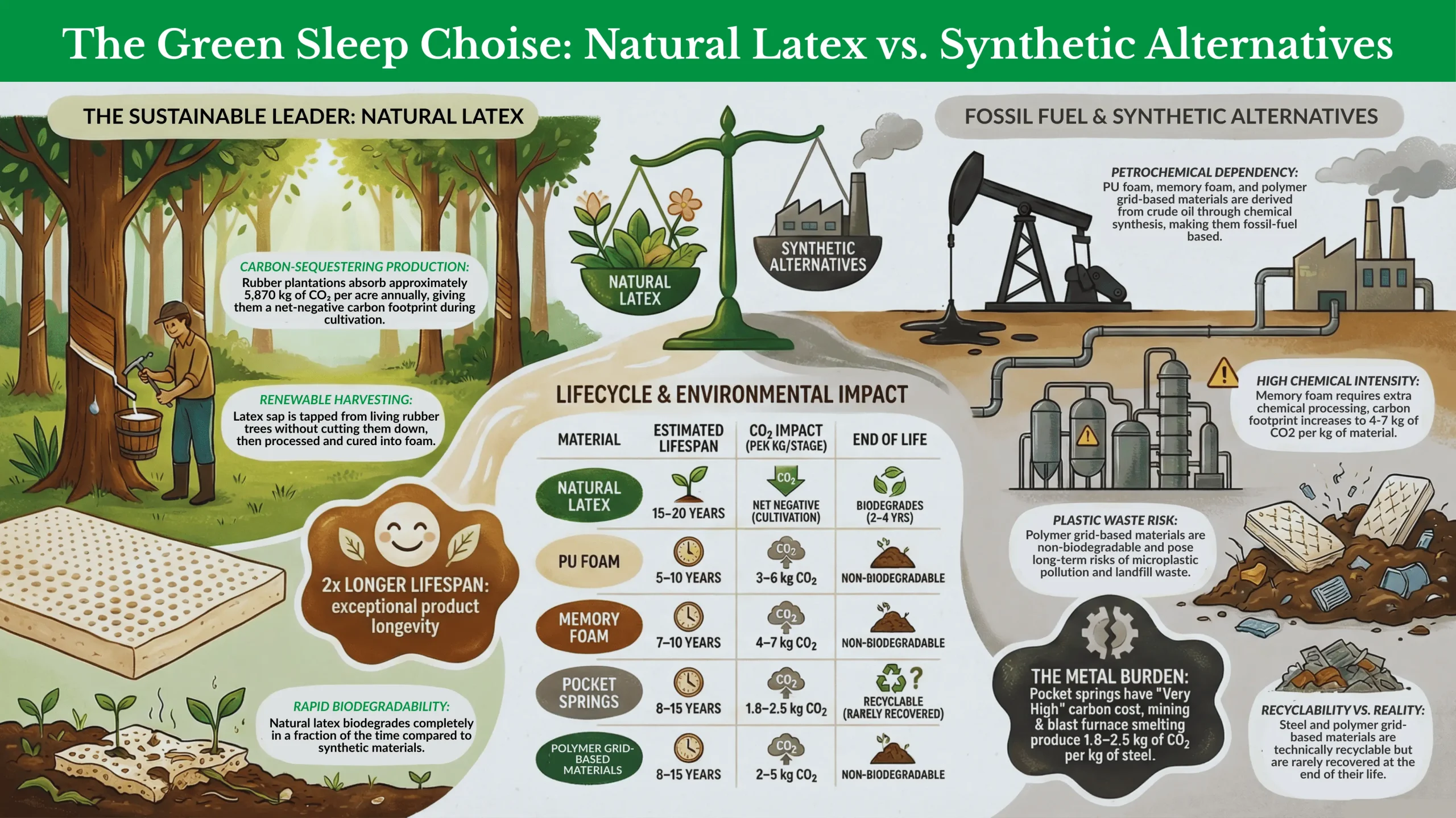
Are you contributing to waste that could remain for almost up to 100–1000 years?

Conventional mattresses made with petroleum-based foams such as PU and memory foam are widely reported to take almost up to 80–120 years — and in some cases close to 1000 years — to break down under landfill conditions. In contrast, natural latex, derived from renewable rubber trees, is biodegradable and can decompose significantly faster — in some conditions within 1-4 years — under the right environmental conditions. Choosing natural materials means considering not only how you sleep today, but the footprint you leave behind tomorrow.

img

Frequently Asked Questions

Mattresses come in many types – Latex Foam, Polyurethane (PU) Foam, Coir, and Spring being the most common. There are also hybrids combining these, as well as water and air beds. Since we spend about one-third of our lives on a mattress, it’s worth knowing the options before buying.

The best way to decide is to test-sleep before purchase:

  • Shortlist 2–3 options at a retailer.
  • Lie down in your usual sleeping position for a few minutes.
  • Evaluate both comfort and support.
  • If you share the bed, test together.

Generally, latex foam mattresses suit most people, offering excellent orthopedic support and luxurious comfort, though they are priced higher than other types.

Latex Foam offers superior cushioning, resilience, and orthopedic support compared to PU foam, coir, cotton, or spring mattresses. It adapts naturally to your body, promotes better blood circulation, and lasts longer. While PU foam and coir are cheaper, they sag or lose resilience quickly. Springs give decent comfort but transfer motion and wear out. Cotton is the least durable and unhygienic option.

High-quality latex foam, like GeoFoam, lasts 10–12 years. Inferior versions with fillers may collapse in months. GeoFoam comes with a 7-year performance guarantee, ensuring consistent support and comfort.

Good latex foam resists crumbling for over a decade. Issues arise due to:

  • Sunlight exposure (accelerates aging).
  • Poor quality with fillers.
  • Natural aging after 10+ years.

Latex Foam is regaining popularity due to its orthopedic benefits and eco-friendliness. It lost ground earlier because of limited raw material supply, high costs, handling difficulty, and compromised quality by some manufacturers. Today, demand is rising again as people seek natural, long-lasting comfort.

Not at home. Latex is washed during manufacturing, but domestic washing can damage it since it requires uniform drying. Spills can be air-dried, but avoid direct sunlight.

Latex may cause mild heat buildup due to its dense structure. Using cotton covers or quilts reduces this effect. In air-conditioned rooms, it’s not an issue at all.

The holes are intentional – they improve breathability, cushioning, weight reduction, and cost efficiency. Different sizes are used depending on the application (e.g., sofa bases, mattresses).

It’s made from natural rubber sap, which is also used in tires and auto components. Limited supply, high demand, and small-batch processing raise costs. Unlike PU or coir, latex foam is dense, uniform, and long-lasting – making it an investment in comfort and health.

GeoFoam uses a proprietary high-latex-content formula, ensuring unmatched durability and performance. Many customers report their mattresses lasting over 15–18 years – far longer than typical latex foams.

Because it’s an investment in health and comfort, Latex Foam offers superior orthopedic support,durability, and eco-friendliness. Considering how much time we spend on mattresses and cushions, the extra cost pays back in years of restful, pain-free sleep.